
Sashiko is a traditional Japanese embroidery or stitching technique. Traditionally, it was used to decorate pieces of clothing but also to reinforce or quilt clothing. I am no expert but what I have learned is that Sashiko stitching was often used to fixate multiple layers of fabric to create a warmer item of clothing. In fact, as it was explained in one source, rags or loose fabrics were joined together via stitching and then sewn into a coat or a jacket.
Given that blue + white is my favorite color combination, Sashiko was bound to fascinate me. It is traditionally done with white thread on indigo-colored fabric. The basic stitch couldn’t be easier: the running stitch. Up and down, up and down, up and down. That is all you have to do with the needle. The trick is in getting the stitches and the spaces between the stitches to be equal.
As with any handicraft, you can be as perfectionistic as you want. For better or worse, I am not a perfectionist. In fact, I kind of like it when there is a mistake here and there in what I do. That is what makes something handmade!
My interest in Sashiko seemed to jive with a general interest in Japanese culture. Of course, we all love the Japanese cuisine. Even if you don’t like sushi or sashimi, you gotta love teriyaki and tempura! Plus, there are two japanese concepts I find particularly comforting. One is wabi sabi and the other is ikigai.
Wabi sabi – not to be confused with the most excellent japanese mustard, wasabi – is the concept of accepting changeability and imperfection as beautiful. As I said, I am not a perfectionist. So, the concept of wabi sabi fits right into my universe!
Ikigai is something that gives a sense of purpose or fulfillment. It reminds me a little of Joseph Campbell’s philosophy of following your bliss. Perhaps I am stretching things a bit by saying this. But, the two concepts seem to focus on similar aspects of life.
Wabi sabi and ikigai, together, pretty much sum up my life philosophy. So, what could be better than a handicraft that jives with that!
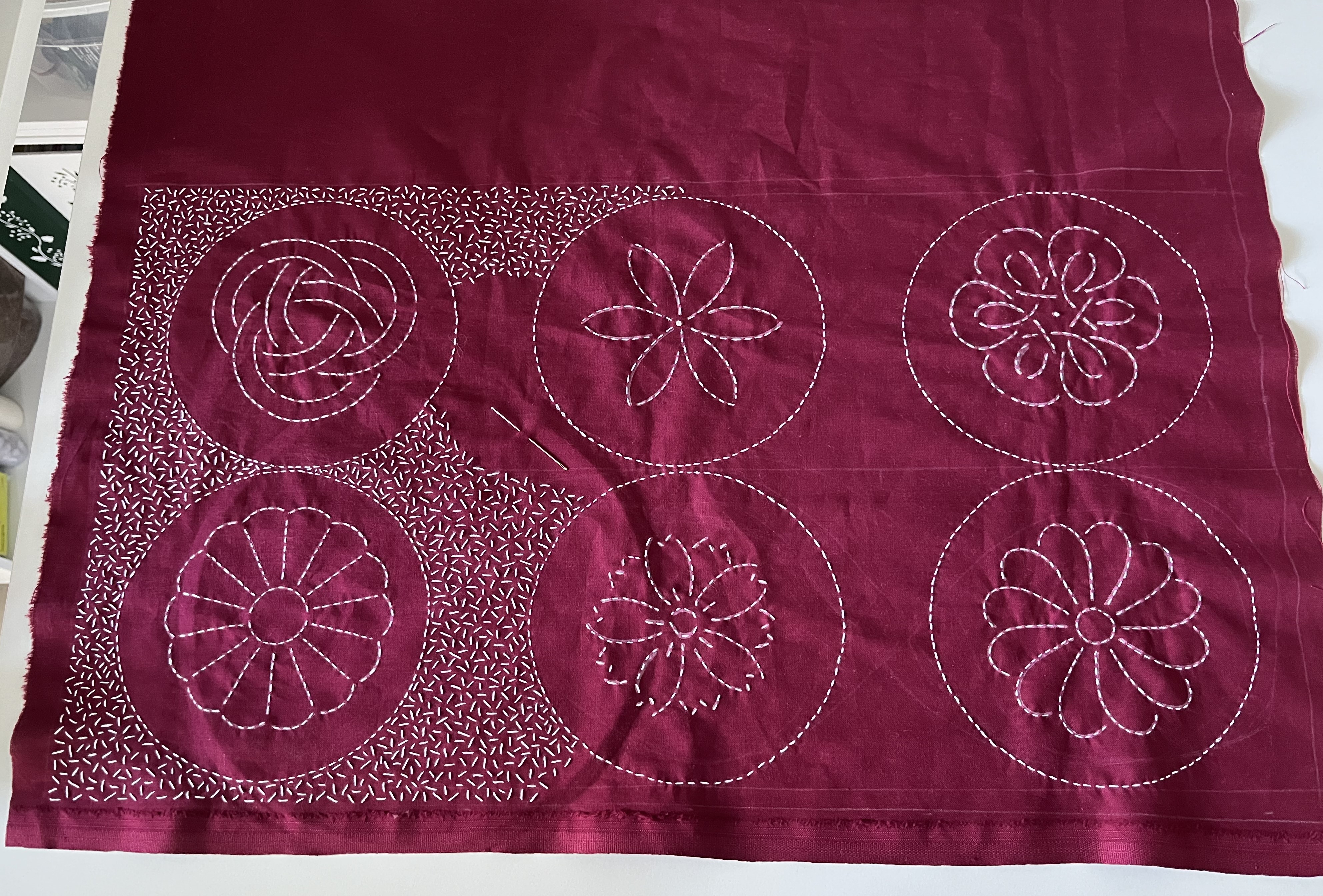
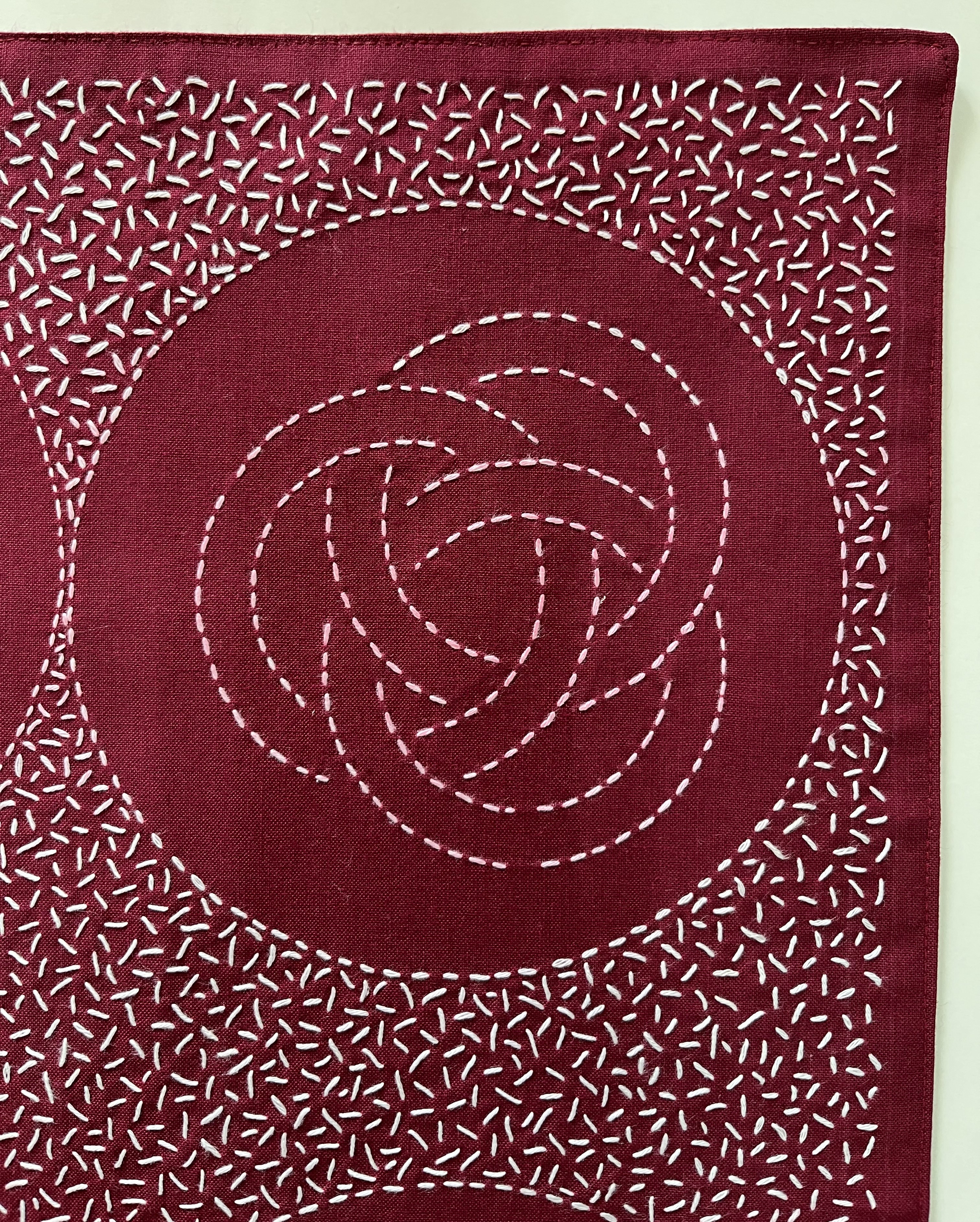

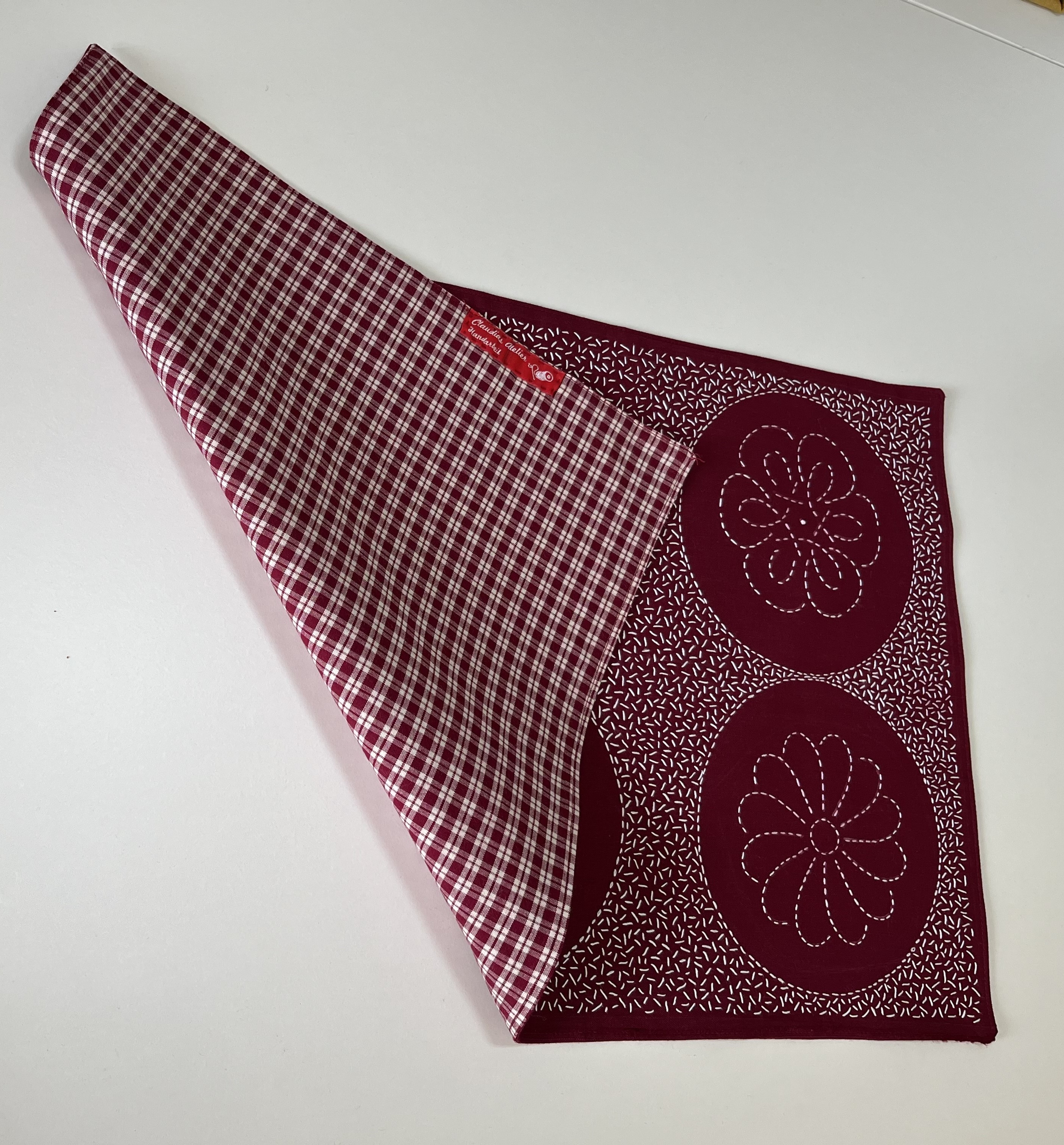

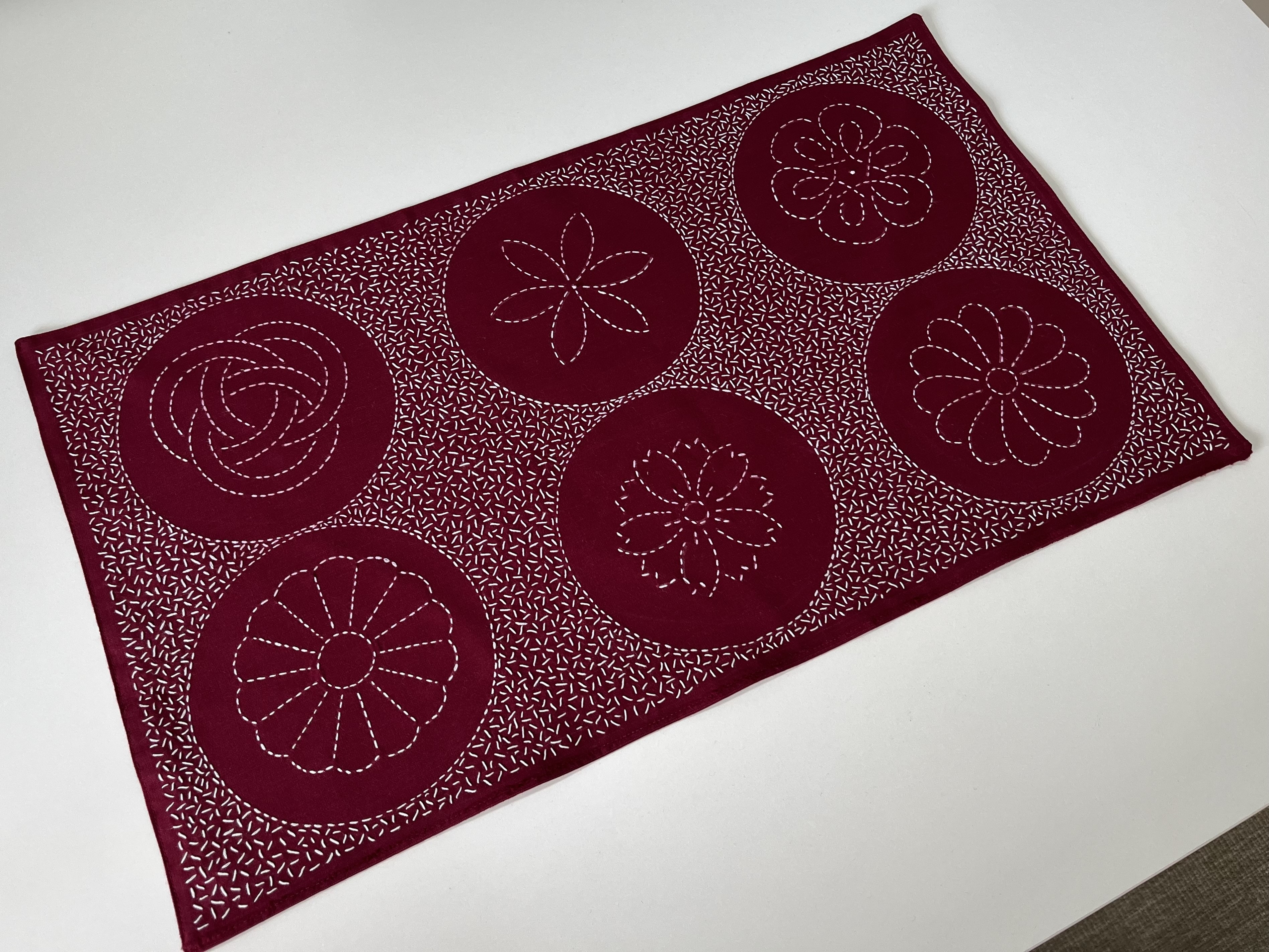
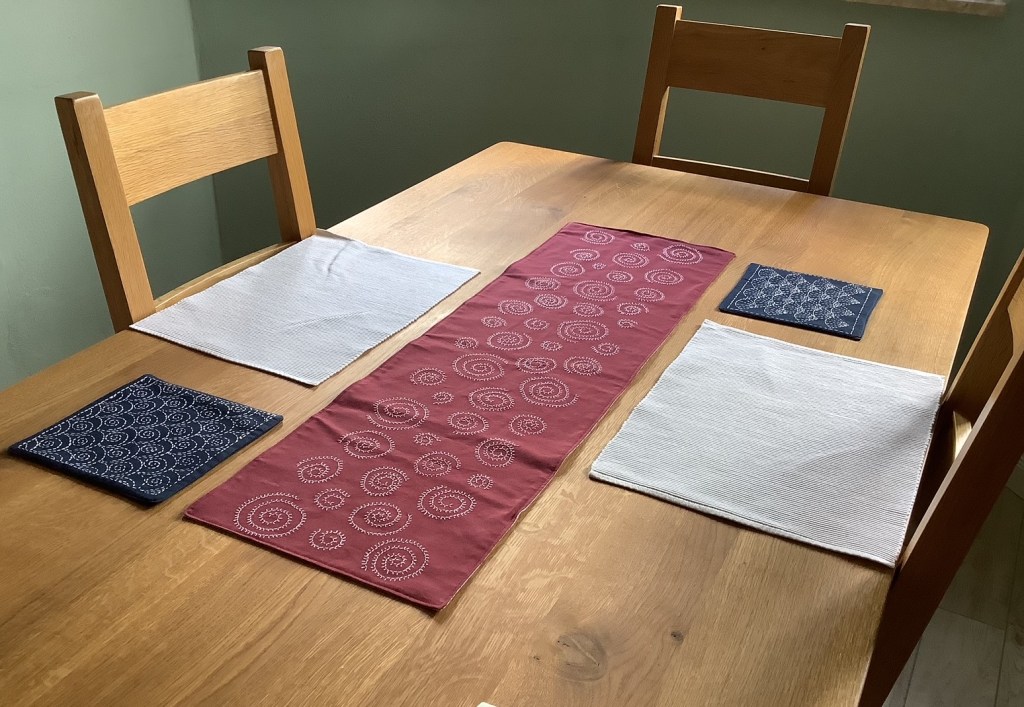
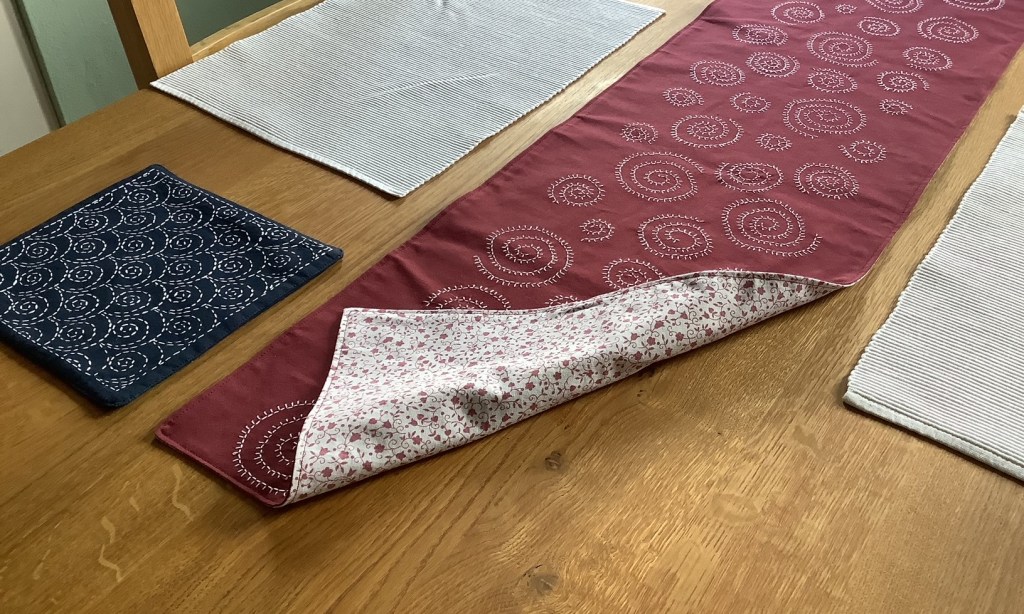

Table Runners
Table runners are one of my favorite projects. I hate to cover our beautiful oak table with tablecloths; so, runners are perfect! Plus, like placemats, they are like little pieces of art, small canvases for the table.
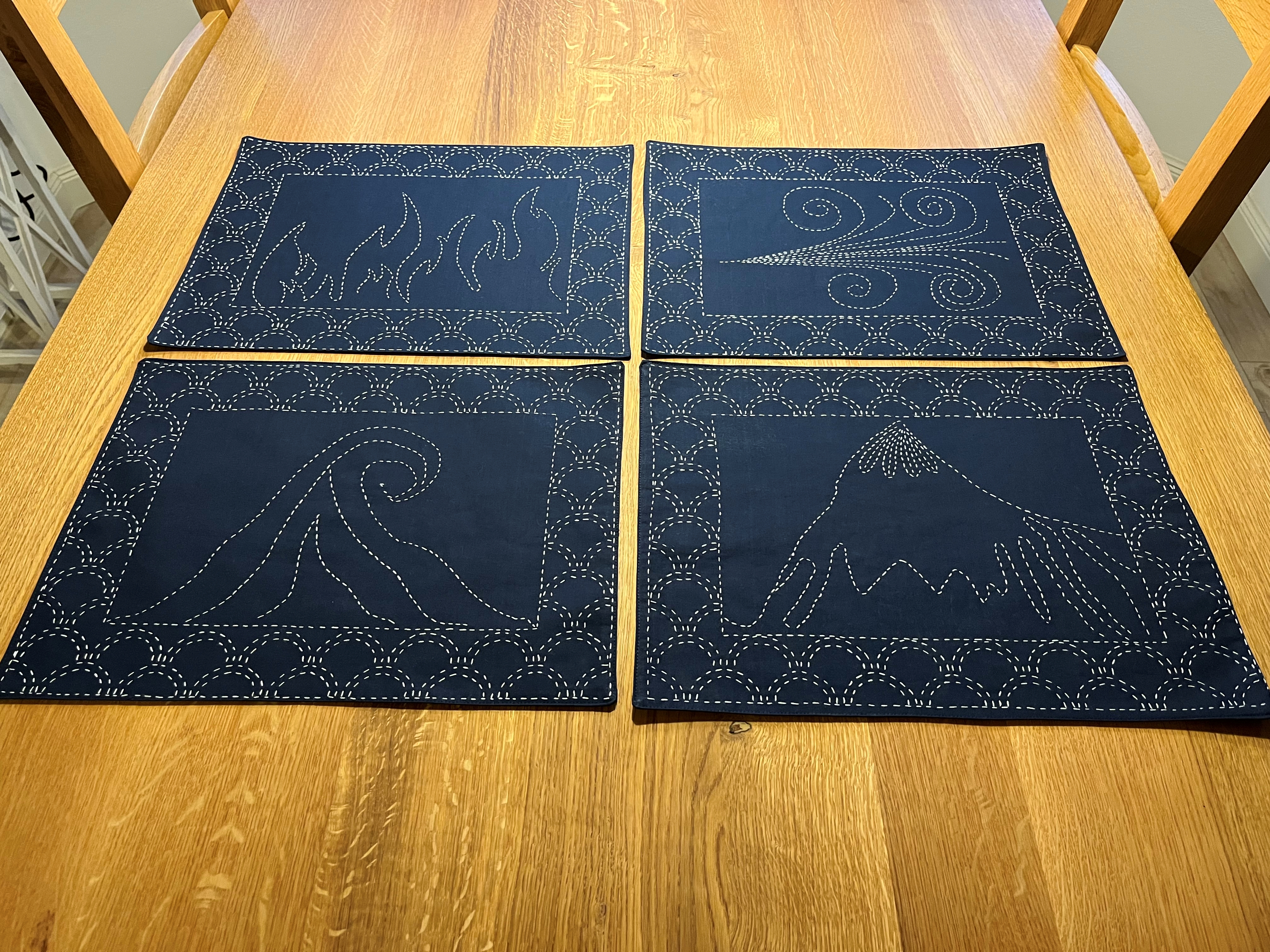




Placemats
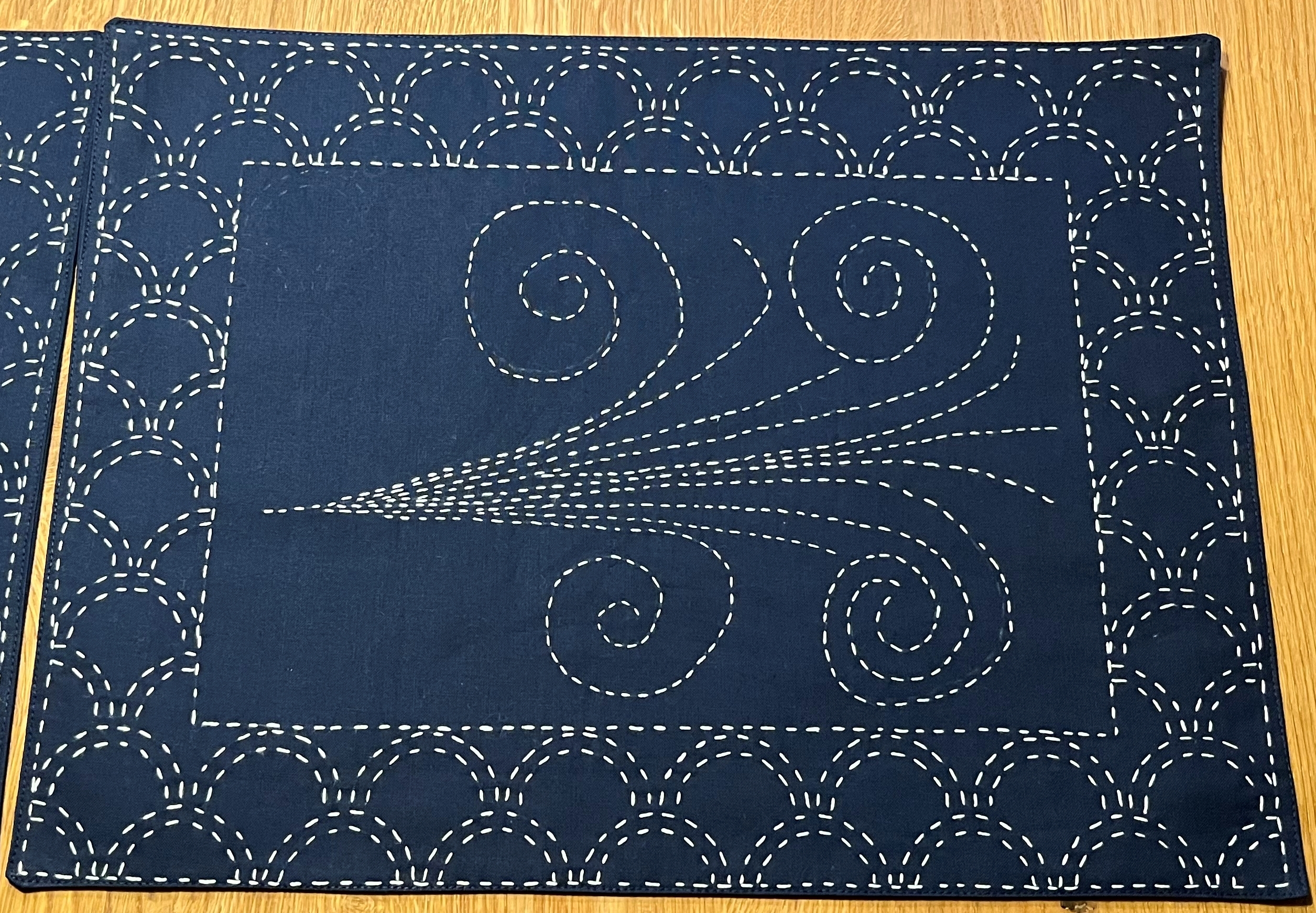
There are some traditional forms or patterns in sashiko, which you will see repeated. If you are interested in this type of embroidery work, I recommend The Ultimate Sashiko Sourcebook by Susan Briscoe. It is my bible for sashiko patterns. In her book, Susan goes into the history of this kind of stitching as well as going into the various uses and step-by-step pattern instructions. My very first sashiko placemat used the Seigaiha (blue ocean waves) pattern with a branch/leaves as the center design. Once I decided this looked OK, I designed a set of placemats using the four elements as a theme (earth, water, air, fire).
Given that sashiko patterns are relatively precise in their layouts, and given that I am not much of an artist, I find it difficult drawing a pattern directly onto the fabric and then stitching it. My solution to this is to trace a pattern onto a water-soluble sticky-backed embroidery stabilizer (I won’t mention any brand names here but you know who you are!) and then sticking the stabilizer onto the fabric. Then, I just follow the design as it is on the stabilizer. Once, I am done, I wash it out and voilá! You have your stitched design!
And, since sashiko was originally used, among other things, to bind multiple layers of fabric together, I decided to use this technique to create a mat for my teapot.
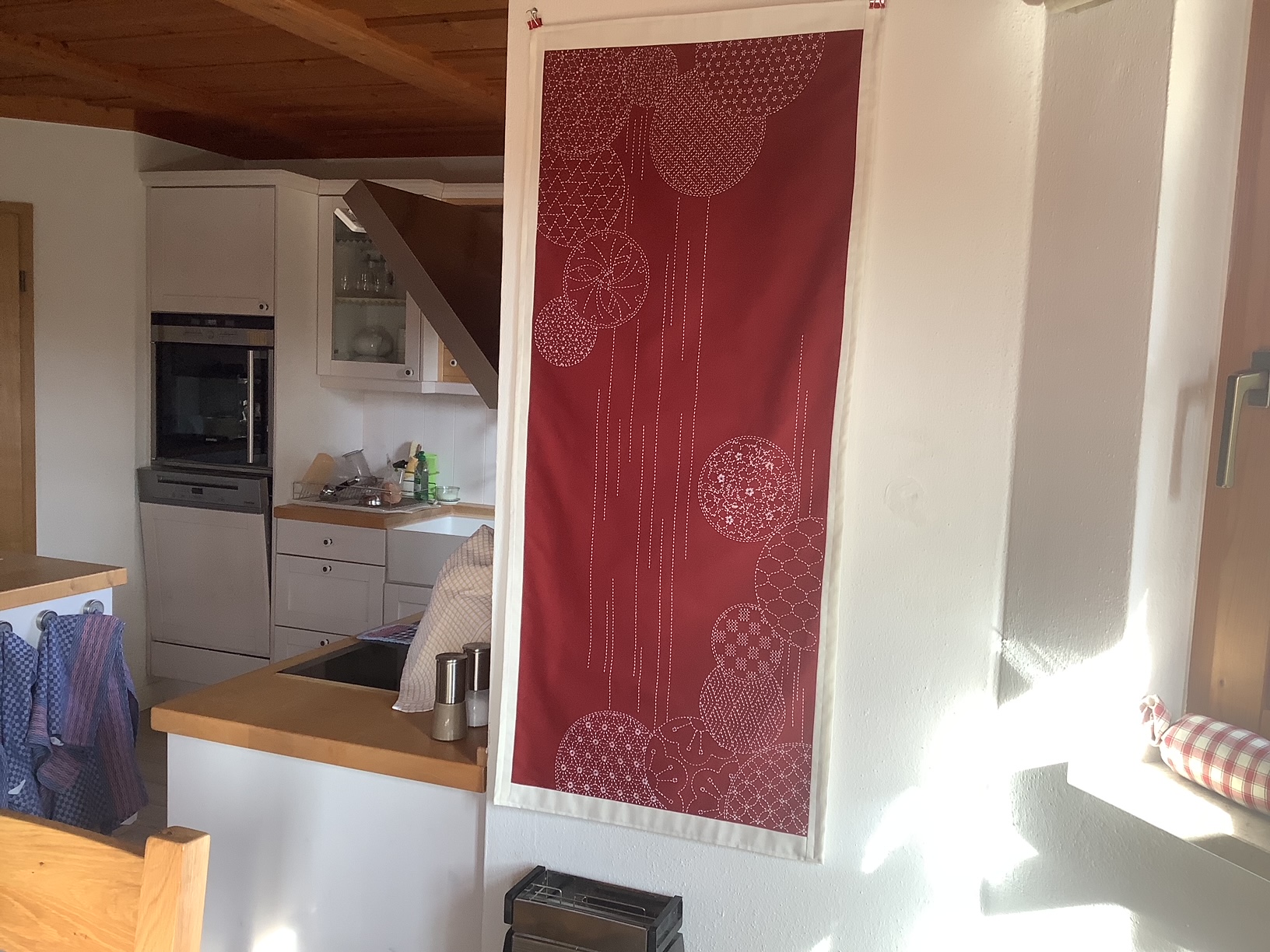
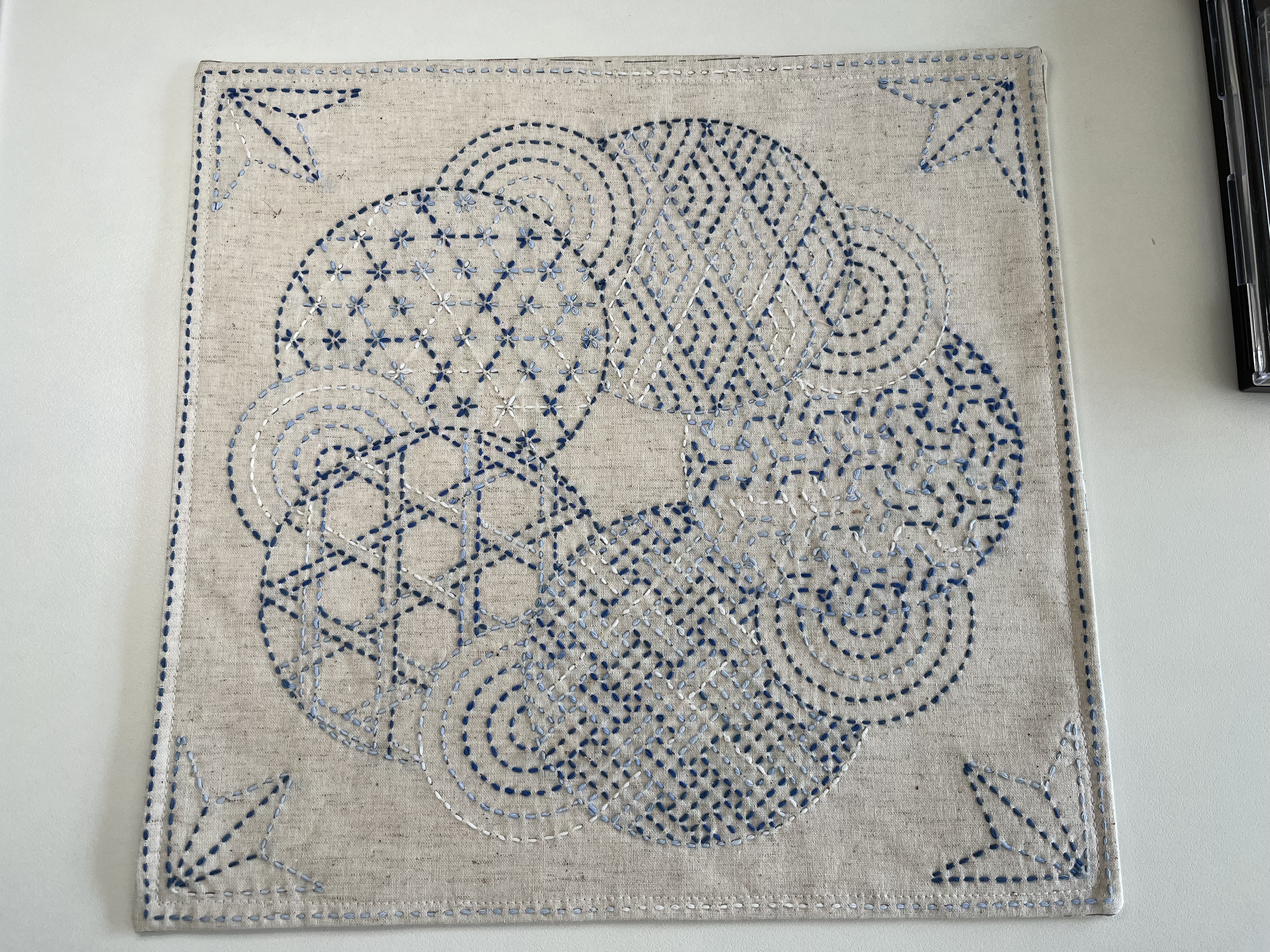
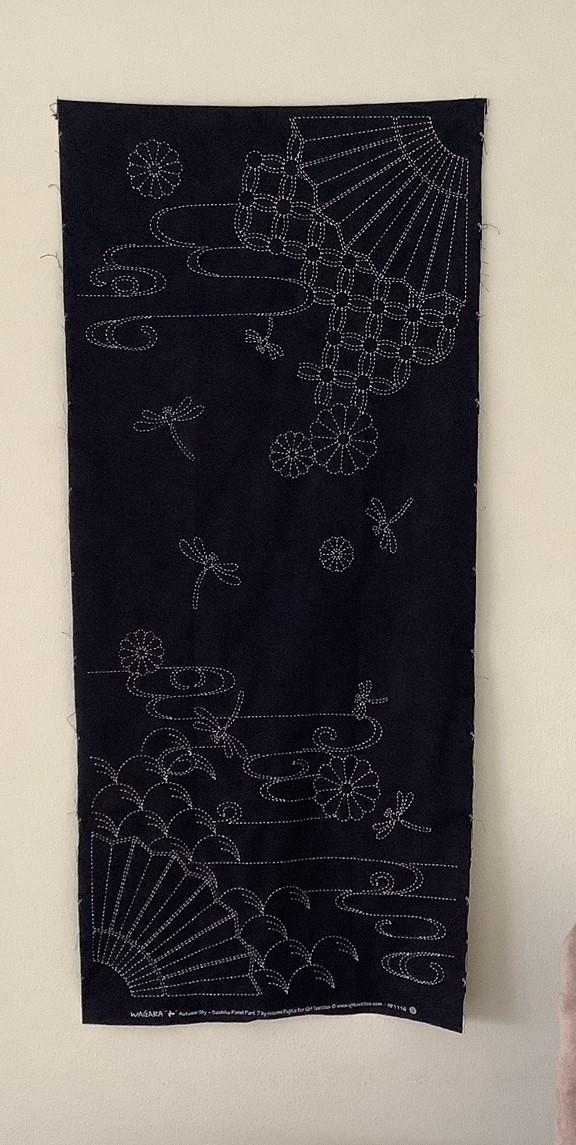

Wall Hangings and other Decorations for the house
If you don’t want to go through the hassle of creating your own designs and transferring them onto your fabric, there are pre-printed sashiko patterns online. Here are some examples of patterns I found on everyone’s favorite online-shopping behemoth.


Clothing and Shopping Bags
I mentioned already that wabi sabi and ikigai are kind of part of my life philosophy, right? So, why not use the traditional running stitch from sashiko to put this on shopping bags! A friend of mine said these two look like they are company logos, which is kind of funny if you think about it. I use these cotton shopping bags almost every day to carry my groceries; this is kind of a standard size here in Germany. Carrying these bags around with me helps to remind me not to take things so seriously (like idiots who block two spots in the supermarket parking lot!)
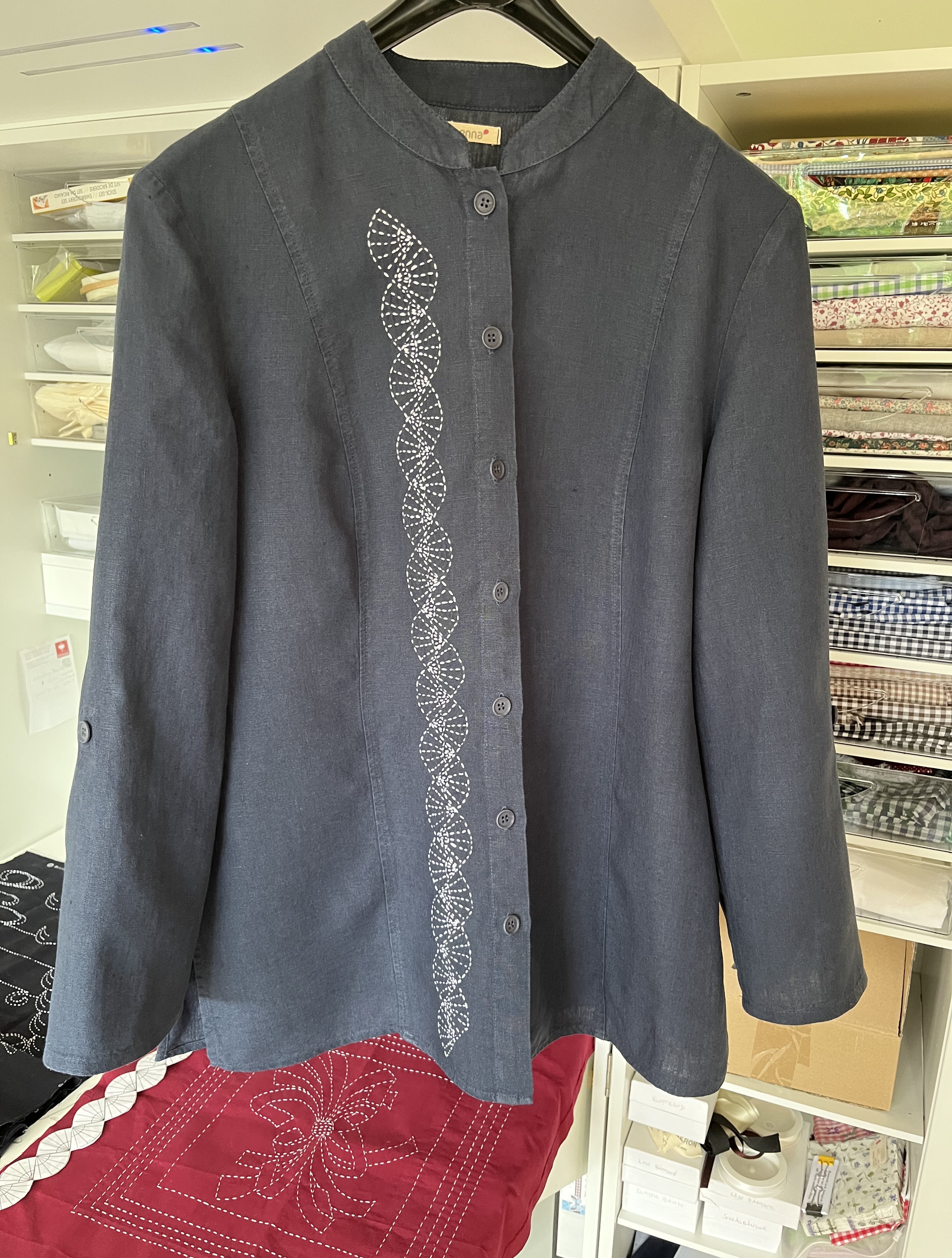
As with bobbin-lace, I also use sashiko to jazz up clothing items. I bought a navy blue linen jacket and thought it needed a little something. So, I stitched a single row of one of the traditional sashiko designs. I am still considering stitching one on the other side – my sense of symmetry at work. And, as with bobbin-lace, sashiko makes a great border! I stitched a sashiko design on the hem of a tunic I have.
 Claudia's Atelier